

Temporal Scales by Sebastian Gonzalez
Stone has historically symbolized permanence—an unquestionable solidity, a material resistant to time. In contrast, photography—especially in its digital dimension—has cultivated a parallel myth: that of the everlasting image, the definitive capture, the promise of visual eternity. This exhibition is built precisely from the friction between these two promises of durability, to show how both erode over time, wear down, and transform.
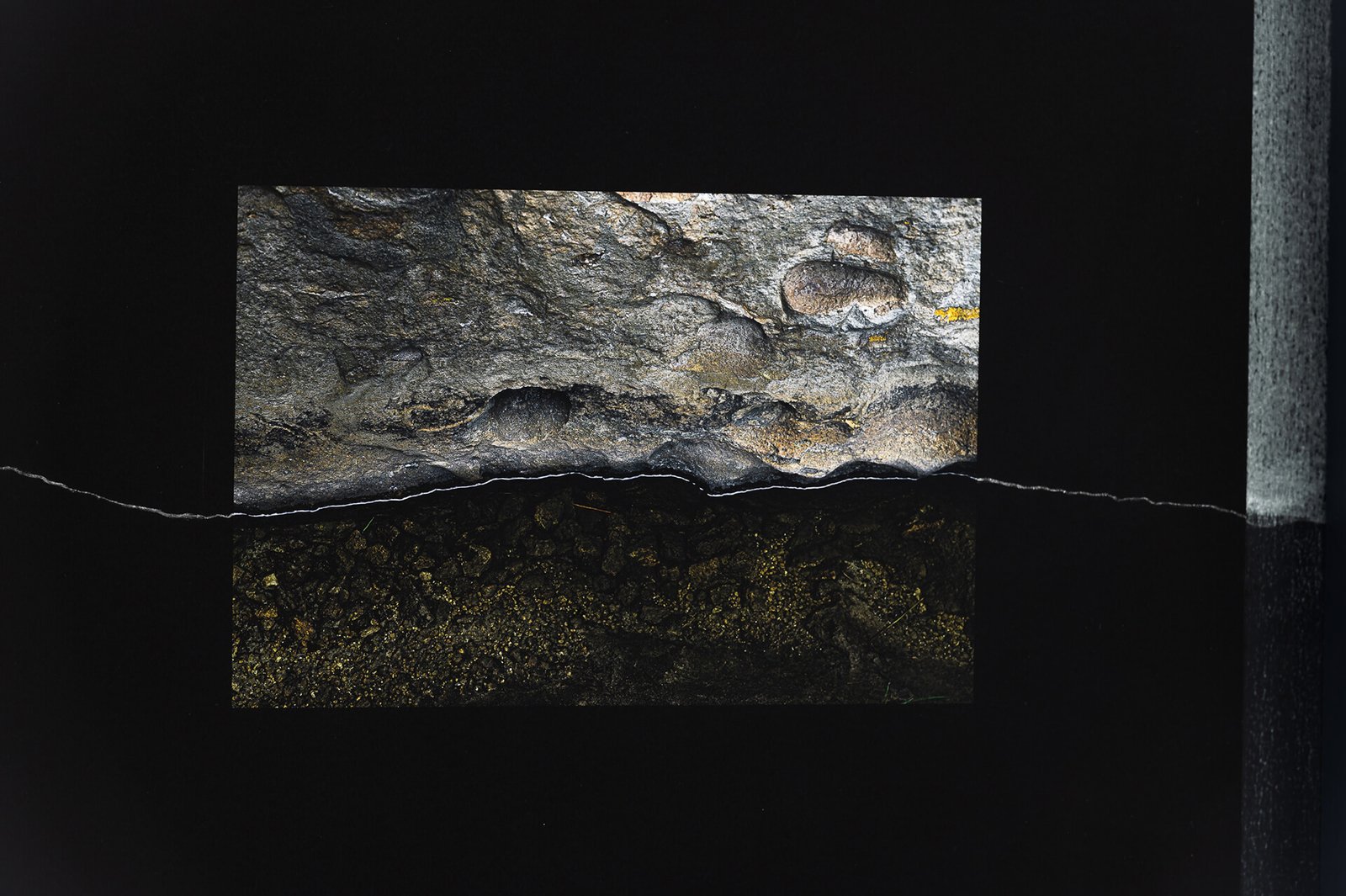
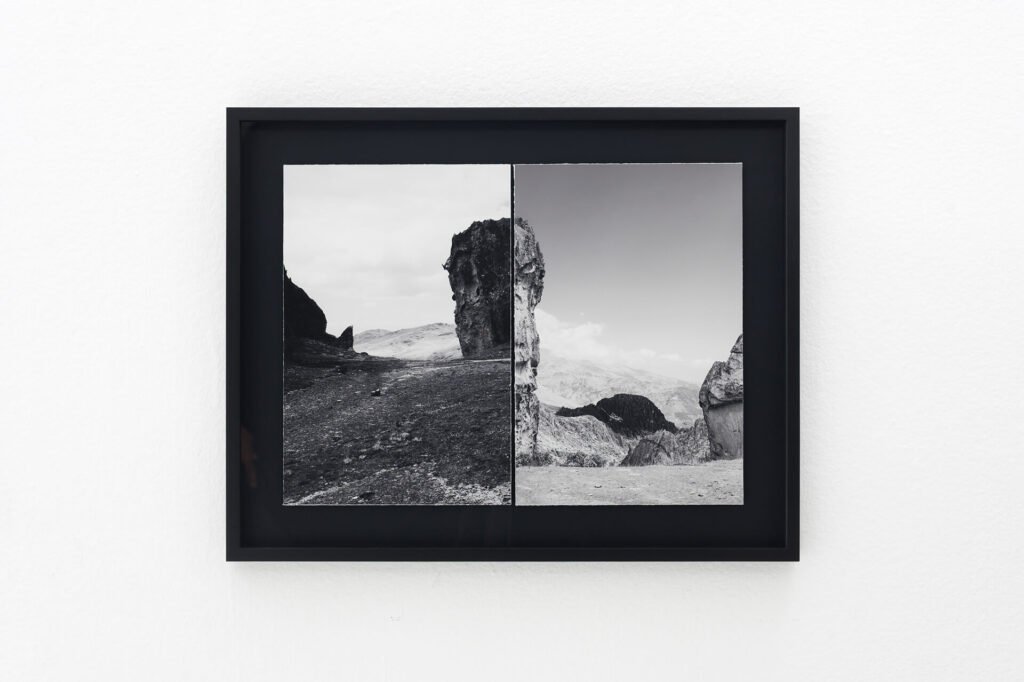
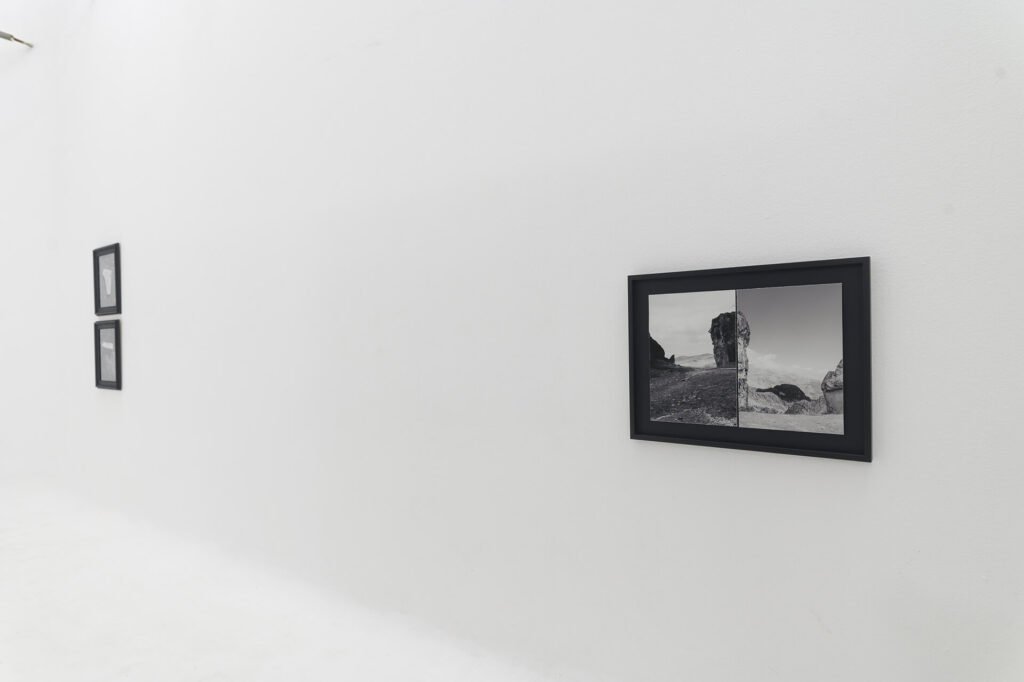
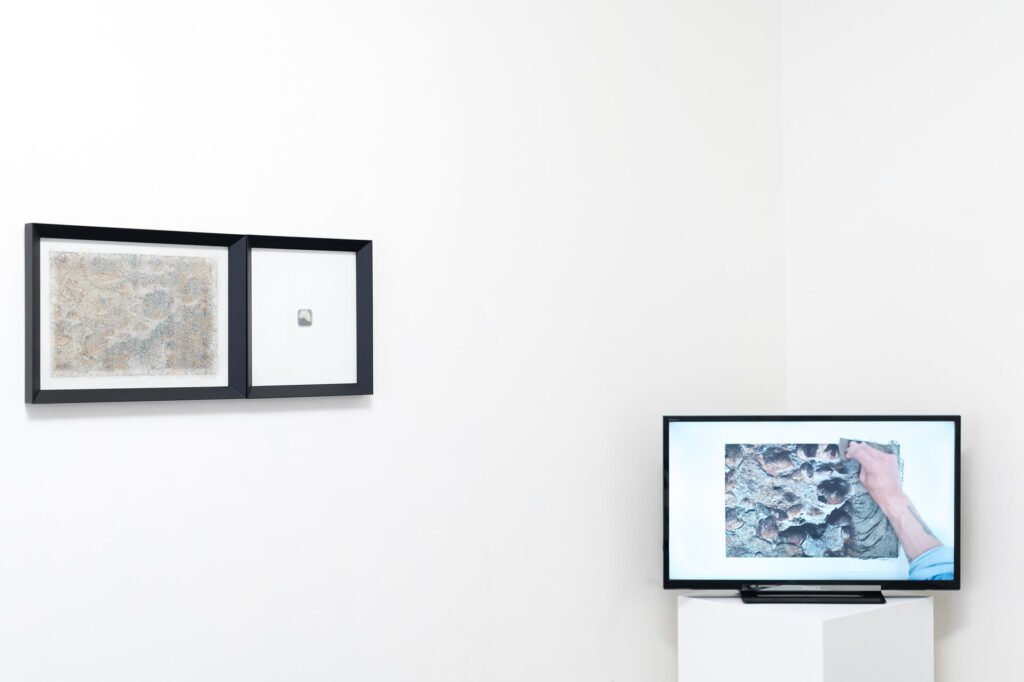
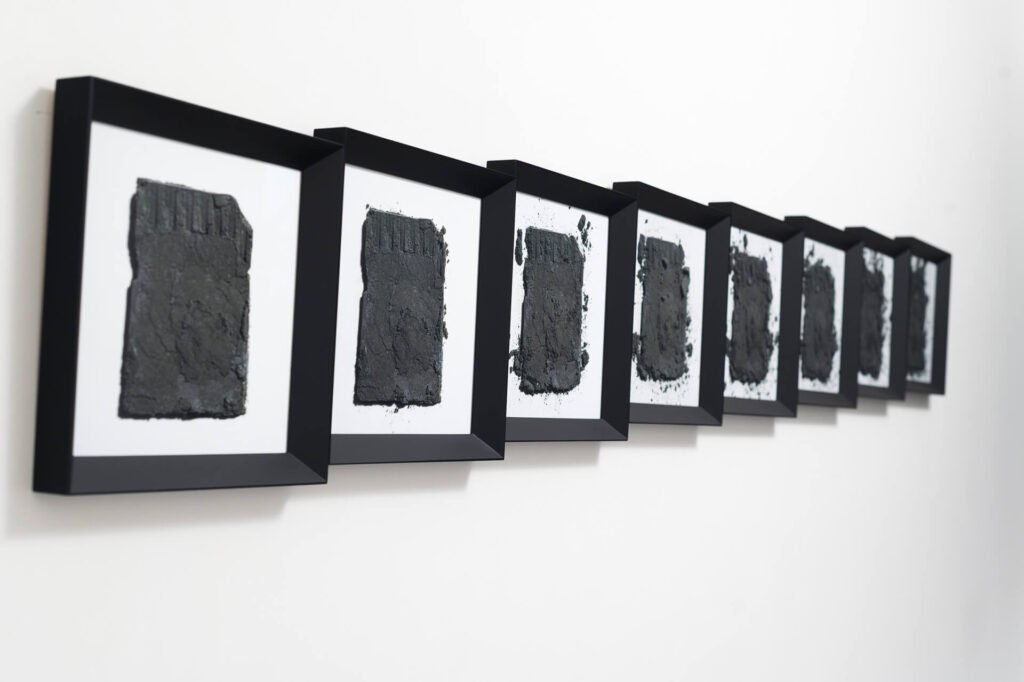
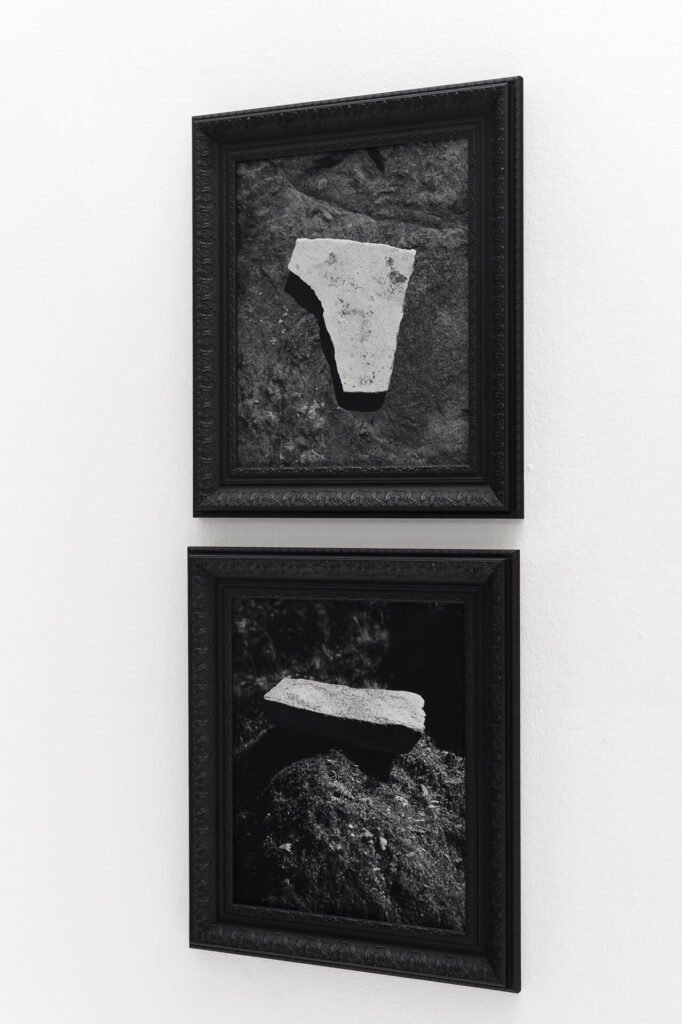
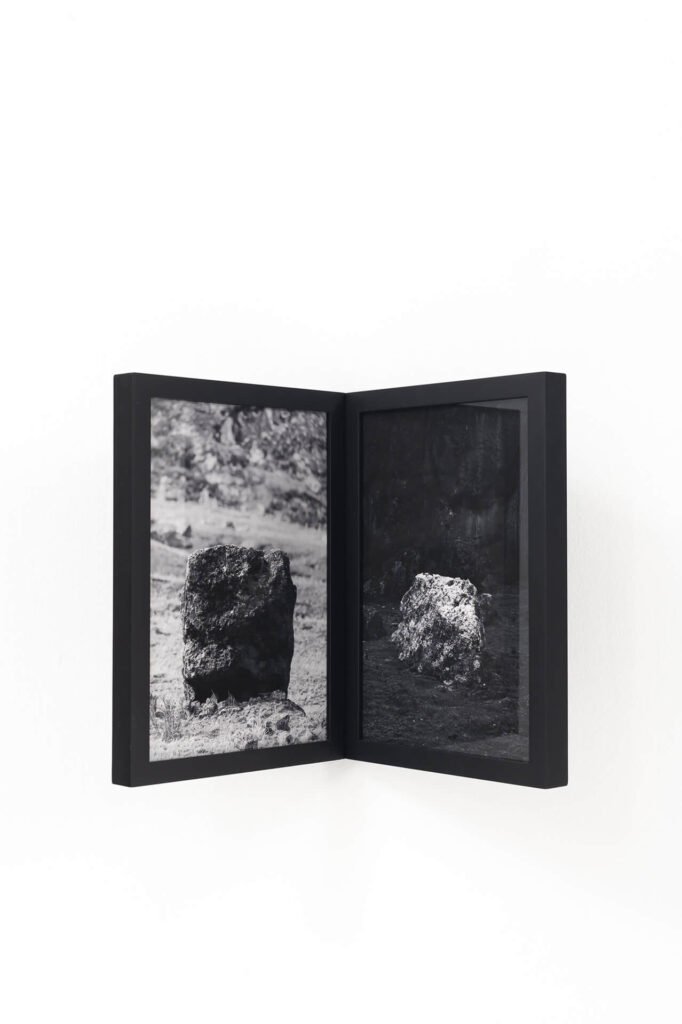
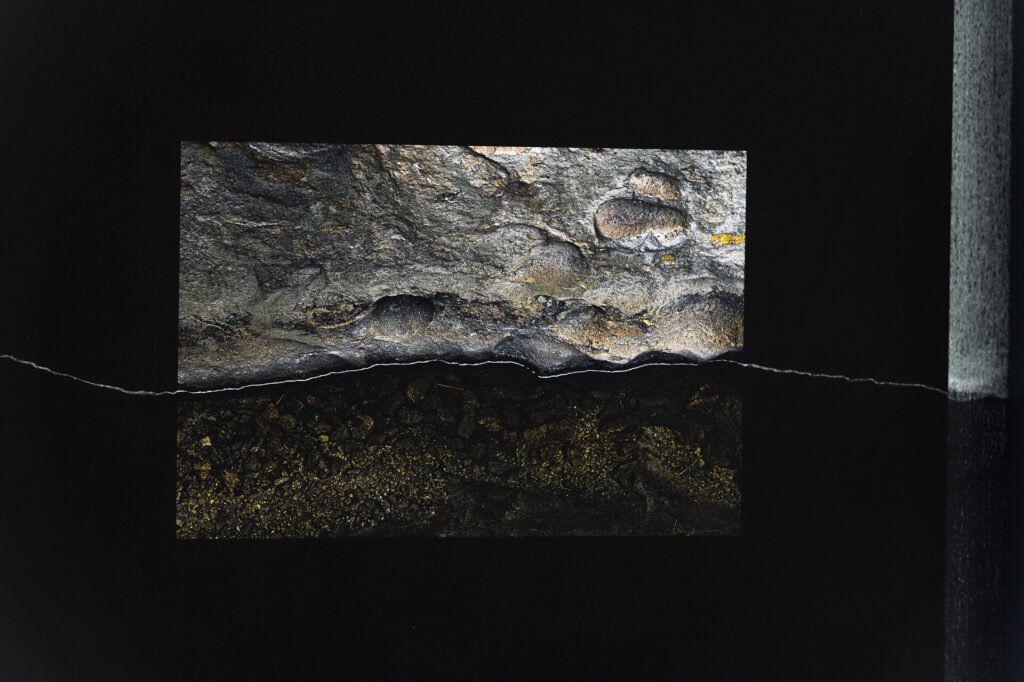
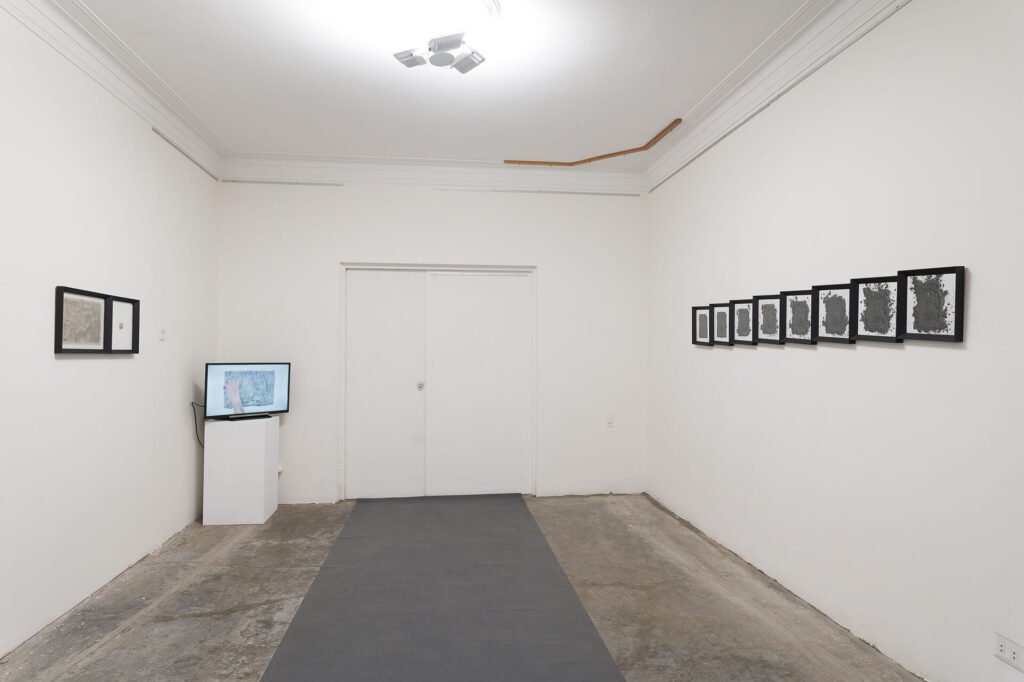
Sebastián González begins from a fascination with the stony. His photographic series focused on recording rock formations in the Andean highlands do not idealize their monumentality; instead, they observe them as vulnerable bodies, cracked by time and the elements. But he does not stop at documentation. He tears, sands, and intervenes in the photographs: he does not merely represent wear—he performs it on the image itself. Thus photography ceases to be an intangible document and becomes fragile matter, an eroded surface.
In these series, the lithic landscape appears as a mirror of a broader process: everything that seems permanent is in fact subject to change. From this perspective, wear is not decay but a condition of what is alive and real. The images come undone as the world does: slowly, almost imperceptibly, but with irreversible effects.
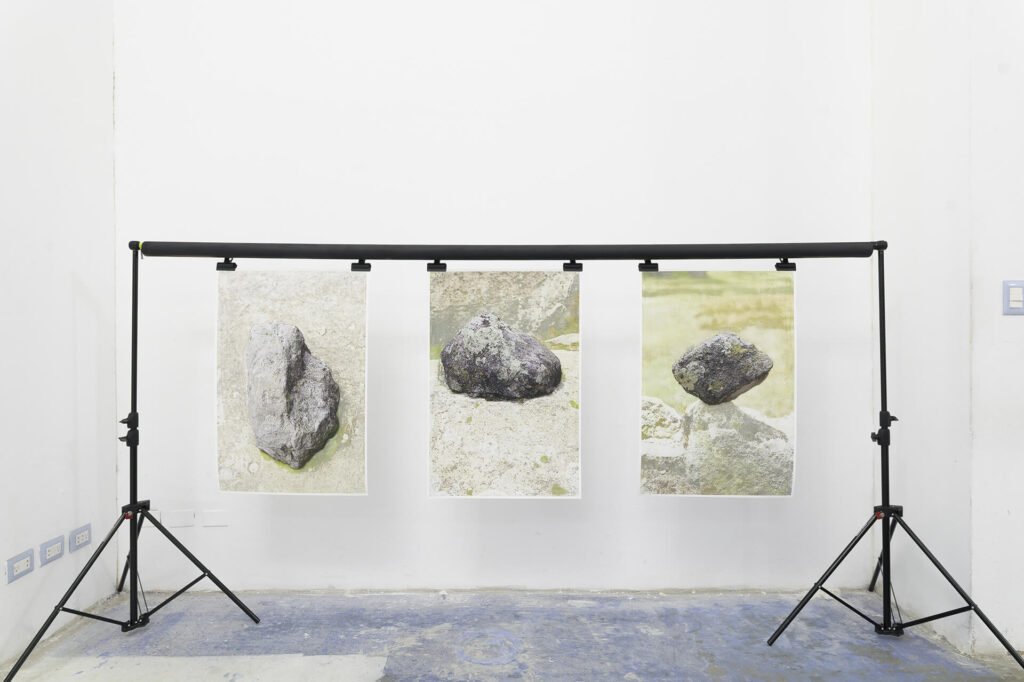
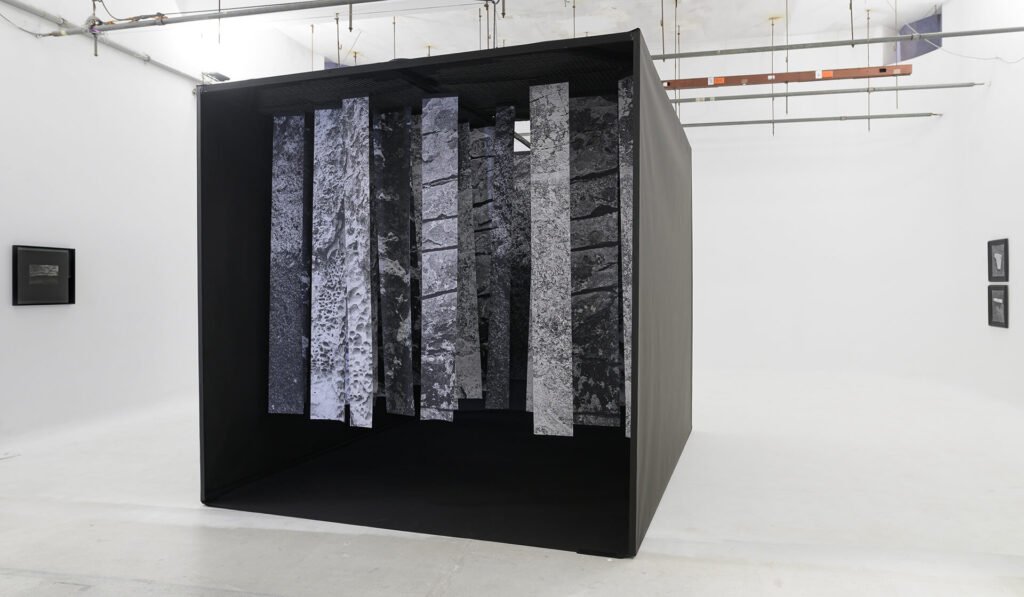
The installation titled “Roca Expuesta” (Exposed Rock) gives this process a new dimension. The prints, suspended from the ceiling, are arranged in layers that form a stratified visual field. Light strikes each plane unevenly, making the front surfaces appear sharper while those in the back progressively dissolve. This arrangement produces both a visual and symbolic effect: the visible imposes itself on what fades, as occurs in memory, where the closest recollections retain their form while others dissolve into distance. The lightness of the paper contrasts with the stony textures it carries, revealing a material paradox in which the ephemeral supports what appears lasting—and where memory itself behaves as a surface in constant erosion.
In Sebastián’s hands, photography does not seek to preserve the permanence of things, but to give form to their transformation. The images are not only traces of wear; they also enact and undergo wear. Each medium reveals itself as a sensitive body, subjected to processes of deterioration and reconfiguration. In this material vulnerability, photography approaches memory: both record, but also forget; both retain something only insofar as they let the rest go.
This exhibition proposes, then, a geological and poetic reading of the image: to think of photography as stratum—as a sensitive skin that accumulates light, manipulation, and forgetting. It reminds us that every form is transitory, even those we were taught to consider eternal.
Julio Reátegui
Contact us for more information.